





Introduction
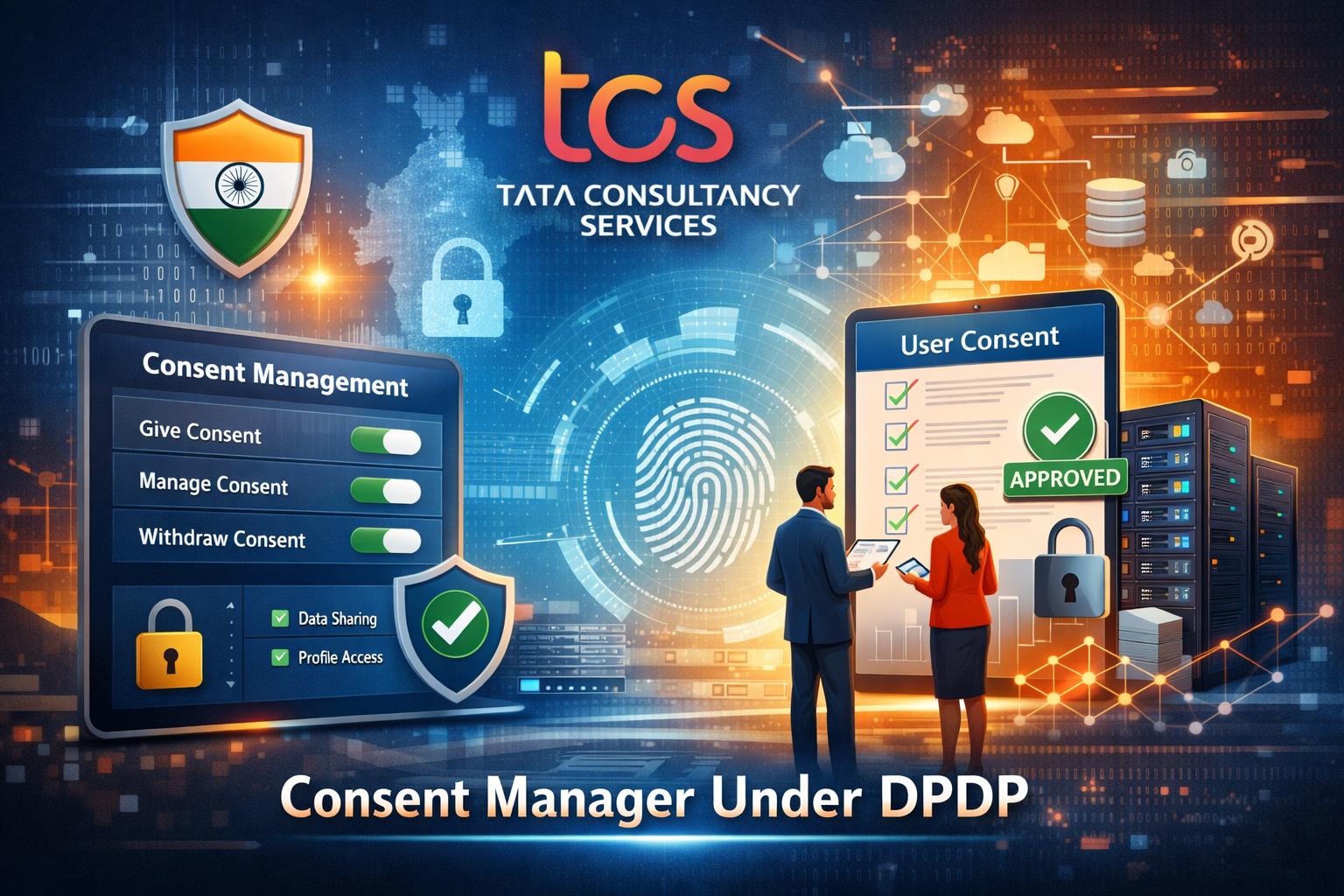
Tata Consultancy Services (TCS), India’s largest information technology services provider, is preparing to apply for a consent manager permit under the Digital Personal Data Protection (DPDP) Rules. This move signals a strategic expansion by TCS into India’s rapidly evolving data privacy and governance ecosystem, as organizations across sectors brace for stricter regulatory oversight on personal data processing.
Background and Regulatory Context
The Digital Personal Data Protection Act and its associated rules establish India’s first comprehensive legal framework for the protection of digital personal data. A central pillar of this framework is the concept of the consent manager. These entities act as neutral, regulated intermediaries that enable individuals to provide, manage, review, and withdraw consent for the use of their personal data in a transparent and standardized manner.
Consent managers are required to be registered with the Data Protection Board of India and must comply with strict eligibility criteria. These include incorporation in India, minimum net worth thresholds, robust technical safeguards, and demonstrable independence from data fiduciaries whose data they may help manage.
TCS’s Strategic Intent
TCS’s decision to seek a consent manager permit reflects its intent to move beyond traditional IT services into high value data governance and privacy enablement offerings. By entering this space early, TCS aims to position itself as a trusted infrastructure provider for consent lifecycle management across industries such as banking, financial services, insurance, telecom, healthcare, and digital commerce.
Industry observers note that TCS already has deep relationships with large enterprises and government bodies, placing it in a strong position to integrate consent management solutions with existing enterprise systems, identity frameworks, and compliance platforms.
Market Opportunity
India’s data protection compliance market is expected to see significant growth over the next few years as DPDP enforcement timelines come into effect. Estimates suggest that compliance and privacy related services could collectively represent a multi thousand crore rupee opportunity, with consent management forming a key component of this emerging market.
Several large technology and digital platform companies are reportedly exploring similar permits, indicating that the consent manager ecosystem could become a competitive but strategically important layer of India’s digital infrastructure.
Technical and Operational Considerations
Operating as a consent manager requires more than regulatory approval. Entities must build scalable platforms capable of handling high volumes of consent requests, ensuring interoperability across sectors, maintaining detailed audit trails, and enforcing strong cybersecurity controls. Transparency, neutrality, and resilience will be critical, as consent managers are expected to act in the best interest of data principals rather than commercial data users.
For TCS, this likely means leveraging its strengths in enterprise architecture, cloud services, cybersecurity, and compliance automation to deliver a secure and regulator ready consent management framework.
Impact and Significance
The entry of a major IT services player like TCS into the consent manager space could accelerate enterprise adoption of DPDP compliant systems. It may also help standardize consent practices across industries, improving trust among consumers and reducing compliance friction for businesses.
From a broader perspective, this development underscores how data protection is becoming a core business and technology priority rather than a purely legal obligation.
Outlook
As India’s data protection regime matures, consent managers are expected to play a foundational role in enabling responsible data use at scale. TCS’s planned application indicates strong confidence in the long term viability of this model. Early approval and successful implementation could allow the company to emerge as a key player in shaping India’s consent driven digital economy.
Sources
- Ministry of Electronics and Information Technology (MeitY), Government of India
Digital Personal Data Protection Act, 2023
https://www.meity.gov.in/data-protection-framework - PRS Legislative Research
Digital Personal Data Protection Bill and Act overview
https://prsindia.org/billtrack/digital-personal-data-protection-bill-2023 - Tsaaro Consulting
Consent Managers under the DPDP Act and DPDP Rules
https://tsaaro.com/blogs/consent-managers-under-the-dpdp-act-and-dpdp-rules-2025-functions-obligations-and-governance/