




Introduction
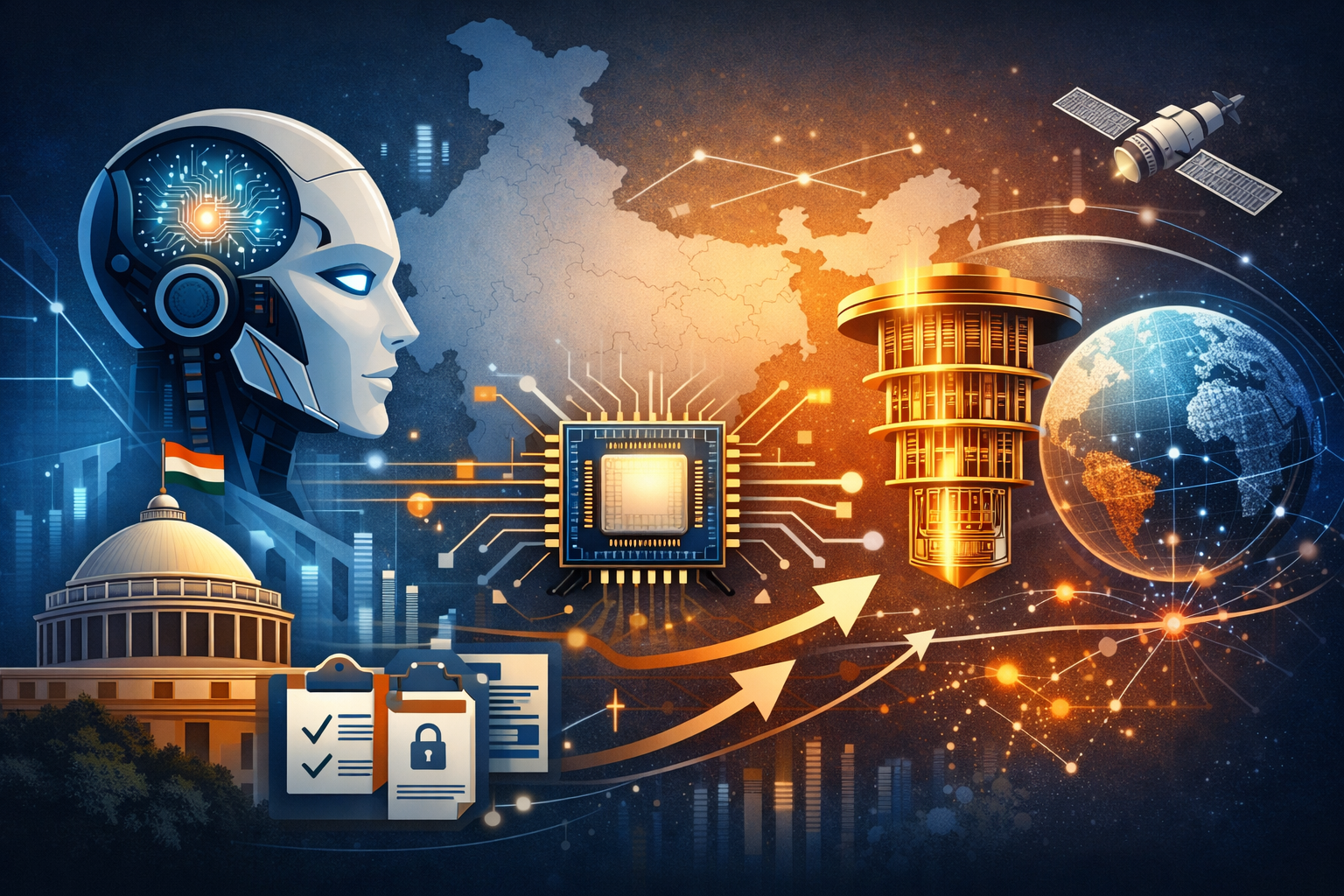
As India moves closer to the Union Budget 2026, leaders from the artificial intelligence, deep-tech, and digital engineering ecosystem are urging policymakers to shift focus from pilots and experimentation to large-scale adoption and global competitiveness. Industry stakeholders believe the upcoming Budget can be a defining moment in positioning India as a trusted hub for next-generation technologies.
AI and deep-tech are increasingly viewed as strategic pillars of India’s innovation-led growth. Startups and technology firms say a clear, long-term policy roadmap is now essential to translate innovation into sustained economic and strategic advantage.
Background and Context
Over the past few years, AI-led enterprises in India have moved beyond proof-of-concept stages and are delivering tangible outcomes across healthcare, fintech, retail, manufacturing, logistics, and public governance. While earlier Budgets focused on nurturing innovation and R&D, industry leaders argue that the next phase must prioritise market creation, responsible deployment, and global scalability.
AI Startups Seek Structural Support and Responsible Frameworks
Priyanka Aeron, Co-founder of Thrive Brands AI, highlighted that Budget 2026 presents an opportunity to accelerate India’s deep-tech momentum through targeted structural reforms.
According to Aeron, AI-driven enterprises are already contributing to productivity and efficiency across sectors. She stressed that government support could significantly amplify innovation velocity and strengthen India’s global standing in AI.
Key expectations from the Budget include simplified compliance regimes, stronger public-private partnerships, and balanced frameworks for responsible AI. Aeron also underlined the need for sustained investment in AI skills, ethical governance, and industry collaboration to ensure trusted and scalable innovation.
She noted that long-term structural support would empower founders to build globally competitive solutions while reinforcing India’s ambition to emerge as a reliable and responsible AI leader.
Market Creation as a Catalyst for Deep-Tech Adoption
Dr Sunil Shekhawat, Co-Founder and CEO of SanchiConnect, pointed out that while previous Budgets laid a solid foundation for innovation-led growth, the next phase must focus on domestic market development.
Drawing parallels with earlier policy support for the drone ecosystem, Shekhawat said similar demand-creation strategies are needed for emerging areas such as quantum technologies, artificial intelligence, space tech, material sciences, and semiconductors. He emphasised that indigenous R&D alone is insufficient without policies that actively stimulate domestic adoption.
In an increasingly volatile geopolitical environment, Shekhawat added, strong domestic technology markets are critical for long-term economic resilience and strategic autonomy.
Digital Engineering and AI Exports Poised for Expansion
The digital engineering and software services sector is also optimistic about sustained global demand. Abhinav Singh, CEO of Techugo, said India’s digital engineering and software exports are expected to grow at a steady pace over the next few years, with AI-led services emerging as a major growth driver.
Industry projections indicate that AI services could witness nearly 25 percent compound annual growth, while overall digital engineering and software exports may grow at 12 to 15 percent annually. By 2027, India’s IT and digital services exports are expected to reach between $250 billion and $270 billion, driven largely by demand from North America and Europe.
Singh highlighted that AI-enabled development is shortening product cycles, enabling smart automation and hyper-personalisation, and reducing time-to-market by up to 30 percent across sectors such as fintech, healthcare, retail, logistics, and consumer internet.
What the Tech Ecosystem Expects from Budget 2026
Across AI, deep-tech, and digital services, industry leaders are aligned on several key expectations from the upcoming Budget:
- Increased public and private investment in AI and deep-tech R&D
- Clear data governance norms and cross-border data flow policies
- Market-creation initiatives to accelerate domestic adoption
- Improved access to venture capital and long-term funding for technology startups
- Large-scale skilling programmes in AI, cloud computing, and cybersecurity
Outlook
Stakeholders believe that well-targeted Budget 2026 measures could help India move decisively from innovation to implementation. By combining responsible AI governance, market-driven policies, and sustained skills investment, India has the opportunity to cement its position as a global hub for next-generation digital and deep-tech innovation.
Sources
- Budget 2026: AI and Deep-Tech Startups Seek Policy Push for Market Adoption and Global Scale—Republic World (direct source for the original article content). Budget 2026: AI and Deep‑Tech Startups Seek Policy Push for Market Adoption…
- Union Budget 2026: Industry Seeks Growth, Innovation, and Execution-Focused Policies—YourStory (startup founders’ expectations ahead of Budget). Union Budget 2026: Industry Seeks Growth, Innovation, and Execution‑Focused Policies
- Budget 2026 Expectations Highlights: India Inc Wants Bold Reforms Including AI, Manufacturing & More—The Economic Times (live updates on sector expectations). Budget 2026 Expectations Highlights: India Inc Wants Bold Reforms
- Startups Seek AI Spending, Skilling and Data Infrastructure Support in Budget 2026—New Indian Express (on AI, skills, data). Startups Seek AI, Skilling and Data Infrastructure Support in Budget 2026
- Tech & Energy Leaders Push Budget 2026 Toward Innovation and DeepTech—TICE News (industry push for tech/DeepTech focus). Tech & Energy Leaders Push Budget 2026 Toward Innovation and DeepTech