



Introduction
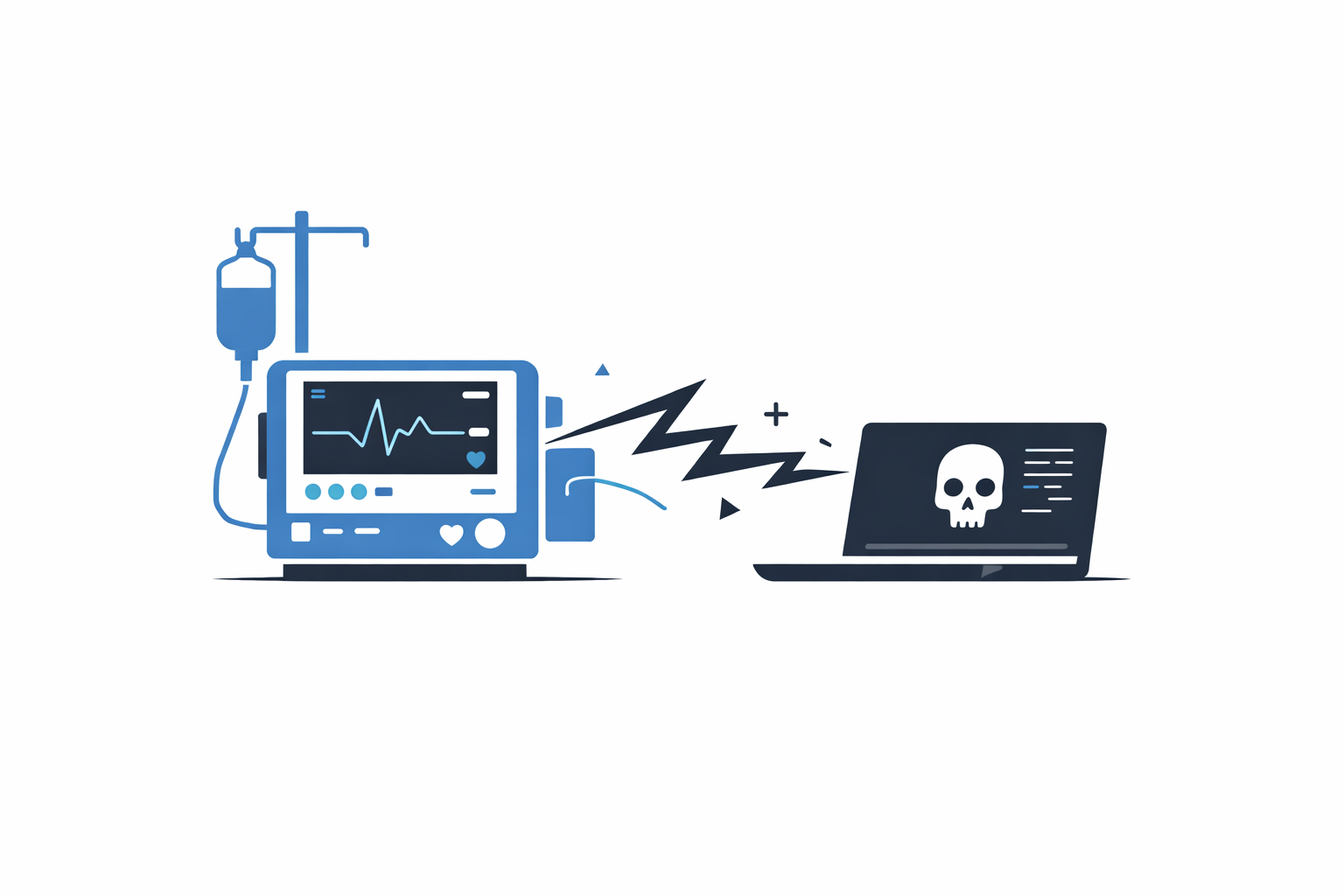
A large-scale cyber incident has disrupted the global operations of Stryker, one of the world’s largest manufacturers of medical technology. Early reports indicate that corporate systems, employee devices, and internal infrastructure were significantly impacted, causing widespread outages across the company’s international network.
The disruption has been publicly claimed by a group calling itself Handala, which security analysts frequently associate with Iranian cyber operations. The group states the operation was conducted in response to recent geopolitical tensions involving military actions in the Middle East.
While many of the group’s claims remain unverified, the incident appears to involve destructive techniques similar to wiper attacks, a category of malware designed to permanently erase data and render systems unusable
Background / Context
Stryker is a US-based medical technology manufacturer headquartered in Michigan. The company produces a wide range of healthcare equipment including:
- Surgical systems
- Orthopedic implants and joint replacement devices
- Hospital beds and patient monitoring systems
- Medical imaging technologies
The firm employs roughly 56,000 people and operates in more than 60 countries, making it a major supplier to hospitals and healthcare providers globally.
Due to its role in healthcare supply chains and contracts with government and defense agencies, disruptions to its operations can have broader implications for medical infrastructure and logistics
Technical Details of the Incident
Initial reporting indicates that the attack caused a global disruption across Stryker’s Windows-based corporate environment, affecting both servers and employee endpoints.
Employees reportedly experienced:
- Inability to log into internal systems
- Wiped corporate laptops and mobile devices
- Defaced login portals displaying the attackers’ branding
- Loss of access to corporate applications and authentication systems
The group claiming responsibility asserted that:
- More than 200,000 systems were wiped
- Approximately 50 TB of internal data was exfiltrated
These claims have not yet been independently verified, and investigations into the full scope of the incident are still ongoing.
Stryker has acknowledged the disruption and confirmed that system restoration efforts are underway
Timeline of Reported Events
Early Morning (US time)
Employees begin reporting widespread outages and login failures across internal systems.
Shortly After
Corporate login pages reportedly display messages attributed to the attacking group.
Same Day
The group known as Handala publishes statements online claiming responsibility and describing the incident as a retaliatory operation.
Later Updates
Stryker confirms that its internal network has been disrupted and that recovery efforts are ongoing.
Understanding Wiper Attacks
Unlike ransomware, which encrypts files in order to demand payment, wiper attacks are designed primarily for destruction rather than financial gain.
Core Objective
The purpose of a wiper is to irreversibly destroy data and disable systems, often as part of a disruptive or politically motivated campaign.
Typical Operation Flow
- Initial Access
- Attackers obtain a foothold through phishing, stolen credentials, or exploitation of exposed services.
- Privilege Escalation
- Administrative credentials or domain control are obtained to maximize impact across the network.
- Lateral Movement
- Attackers spread through internal infrastructure using management tools, remote execution, or Active Directory privileges.
- Payload Deployment
- A destructive payload is distributed to endpoints and servers.
- Data Destruction
- The malware may:
- Overwrite the master boot record (MBR)
- Delete file system structures
- Corrupt storage sectors
- Replace files with random data
- The malware may:
- System Failure
- Devices become unbootable or lose access to critical data.
In large enterprises, attackers may also use legitimate management tools such as software deployment platforms or device management systems to trigger mass wiping events simultaneously.
Historical Context: Wiper Attacks in Cyber Conflict
Wiper malware has been used in several high-profile cyber incidents over the past decade.
Notable examples include:
- Shamoon (2012) which wiped tens of thousands of systems at Saudi Aramco
- NotPetya (2017) which spread globally and caused billions of dollars in damages
- Multiple destructive campaigns targeting Ukrainian infrastructure since 2022
These attacks demonstrate how destructive malware can be used to create operational chaos rather than generate profit.
Potential Impact
Even if core manufacturing systems remain intact, disruptions to a global medical technology company can have cascading consequences.
Possible impacts include:
- Operational delays in equipment manufacturing
- Disruptions to internal logistics and supply chains
- Temporary loss of access to corporate systems
- Device replacement and infrastructure rebuild costs
- Data exposure risks if exfiltration occurred
So far, there is no confirmed evidence that hospital operations or patient care systems were directly affected.
However, cybersecurity experts note that attacks against healthcare suppliers highlight growing risks to critical medical infrastructure.
Response and Mitigation
Organizations responding to destructive cyber incidents typically implement several immediate containment steps:
1. Network Isolation
Affected systems are disconnected from the network to prevent further spread.
2. Credential Rotation
Compromised administrative accounts and authentication systems are reset.
3. Infrastructure Rebuild
Systems impacted by wiping must often be reimaged or rebuilt from backups.
4. Threat Hunting
Security teams search for persistence mechanisms or secondary backdoors.
5. External Investigation
Incident response firms and law enforcement agencies are frequently engaged to assist with forensic analysis.
Expert Commentary
This incident reflects a growing trend in cyber operations where destructive techniques are used to cause operational disruption rather than financial gain.
Healthcare suppliers and medical technology firms represent increasingly attractive targets due to:
- Their global infrastructure
- Dependence on centralized IT environments
- Their role in critical supply chains
The event also illustrates how geopolitical tensions can spill into cyberspace, where corporate networks become indirect targets during periods of international conflict.
Outlook
As the investigation continues, several questions remain unresolved:
- Whether large-scale data exfiltration actually occurred
- The full technical mechanism used to wipe systems
- The degree of network compromise prior to the destructive phase
Regardless of the final attribution, the incident highlights the importance of resilience against destructive attacks, including strong identity protection, network segmentation, and offline backups.
For organizations operating critical infrastructure or healthcare supply chains, the ability to recover rapidly from destructive events may prove just as important as preventing them.
References / Source Attribution
- Kim Zetter, Zero Day newsletter reporting on the Stryker cyber incident
- Reuters reporting on the attack and company response
- Associated Press coverage of the global network disruption
- The Guardian reporting on claims made by the group behind the attack
- Economic Times background on the company and incident details