





Introduction
DNS Poisoning, also known as DNS Cache Poisoning, is a critical cyber threat that undermines the trust model of the internet. By corrupting DNS records, attackers can silently redirect users from legitimate websites to malicious destinations, enabling credential theft, malware distribution, surveillance, and large-scale fraud. Despite being a decades-old attack technique, DNS poisoning remains relevant due to misconfigurations, legacy systems, and weak DNS security practices.
Background and Context
The Domain Name System acts as the internet’s address book, translating human-readable domain names into IP addresses. DNS poisoning exploits weaknesses in this resolution process. When a DNS resolver stores forged or malicious records, every user relying on that resolver can be redirected without any visible warning. This makes DNS poisoning particularly dangerous, as it operates below the application layer and often bypasses traditional security controls.
Technical Details
DNS poisoning typically occurs when an attacker injects false DNS responses into a resolver’s cache. Common techniques include:
- Cache Injection: Flooding a DNS resolver with spoofed responses before the legitimate reply arrives.
- Man-in-the-Middle Attacks: Intercepting and altering DNS responses in transit.
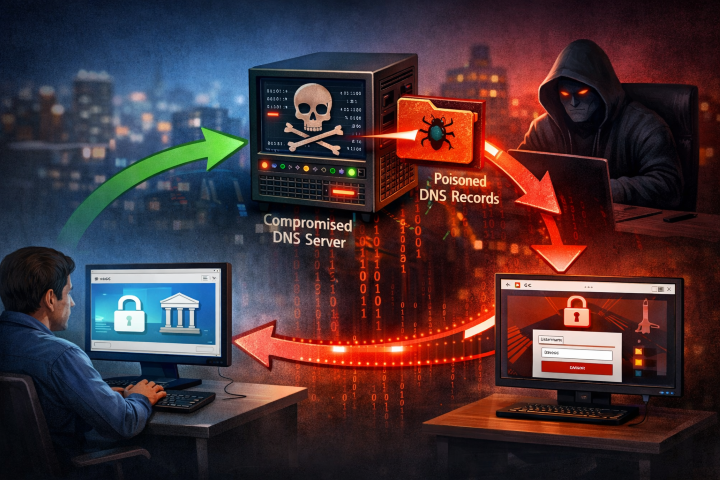
- Compromised DNS Servers: Gaining unauthorized access to authoritative or recursive DNS infrastructure.
- Local Network Attacks: Poisoning DNS responses via rogue routers or ARP spoofing on unsecured networks.
Once poisoned, the resolver continues serving malicious IP addresses until the cache expires or is manually cleared.
Timeline of Events (Typical Attack Flow)
- User requests access to a legitimate domain.
- DNS resolver queries for the IP address.
- Attacker injects a forged DNS response.
- Resolver caches the malicious record.
- User is redirected to a fake or attacker-controlled site.
Impact and Scope
DNS poisoning can have far-reaching consequences:
- Credential harvesting and identity theft
- Malware and ransomware distribution
- Financial fraud and payment redirection
- Website defacement and brand damage
- Mass compromise of users behind shared resolvers, including ISPs, enterprises, and public Wi-Fi networks
Because DNS operates at scale, a single successful poisoning incident can affect thousands or millions of users.
Response and Mitigation
Effective defenses against DNS poisoning include:
- DNSSEC Deployment: Cryptographically validates DNS responses.
- Randomized Source Ports and Query IDs: Reduces predictability for attackers.
- Encrypted DNS: Use of DoH or DoT to prevent interception.
- Regular Cache Monitoring: Detects anomalous or unauthorized records.
- Network Segmentation and Secure Routers: Limits local attack vectors.
Organizations should also audit DNS configurations and retire legacy infrastructure lacking modern protections.
Expert Commentary
DNS poisoning highlights how foundational internet protocols, when left unsecured, can become powerful attack vectors. While endpoint and application security often receive priority, DNS security is frequently overlooked despite its central role in digital trust. Attackers favor DNS-based techniques because they are stealthy, scalable, and difficult for end users to detect.
Outlook
As adoption of DNSSEC and encrypted DNS continues to grow, large-scale DNS poisoning attacks will become harder to execute. However, misconfigured resolvers, unmanaged networks, and outdated devices will continue to present opportunities for attackers. DNS security will remain a critical component of zero trust and defense-in-depth strategies.