




Introduction
The rapid integration of artificial intelligence into enterprise environments has fundamentally reshaped the cybersecurity threat landscape. While organizations leverage AI to enhance automation, analytics, and operational efficiency, adversaries are exploiting the same technology to engineer faster, stealthier, and highly adaptive cyberattacks. In this evolving environment, Incident Response has emerged as a strategic pillar in defending against AI-powered cyber threats.
Background and Context
AI-powered cyber threats go beyond traditional attack models. Threat actors now deploy AI-generated phishing campaigns, autonomous malware, and adaptive attack frameworks capable of learning from their environment. These attacks can dynamically adjust tactics, evade signature-based detection, and scale operations at unprecedented speed. As a result, preventive controls alone are no longer sufficient to stop sophisticated intrusions.
Why Incident Response Matters in the Age of AI
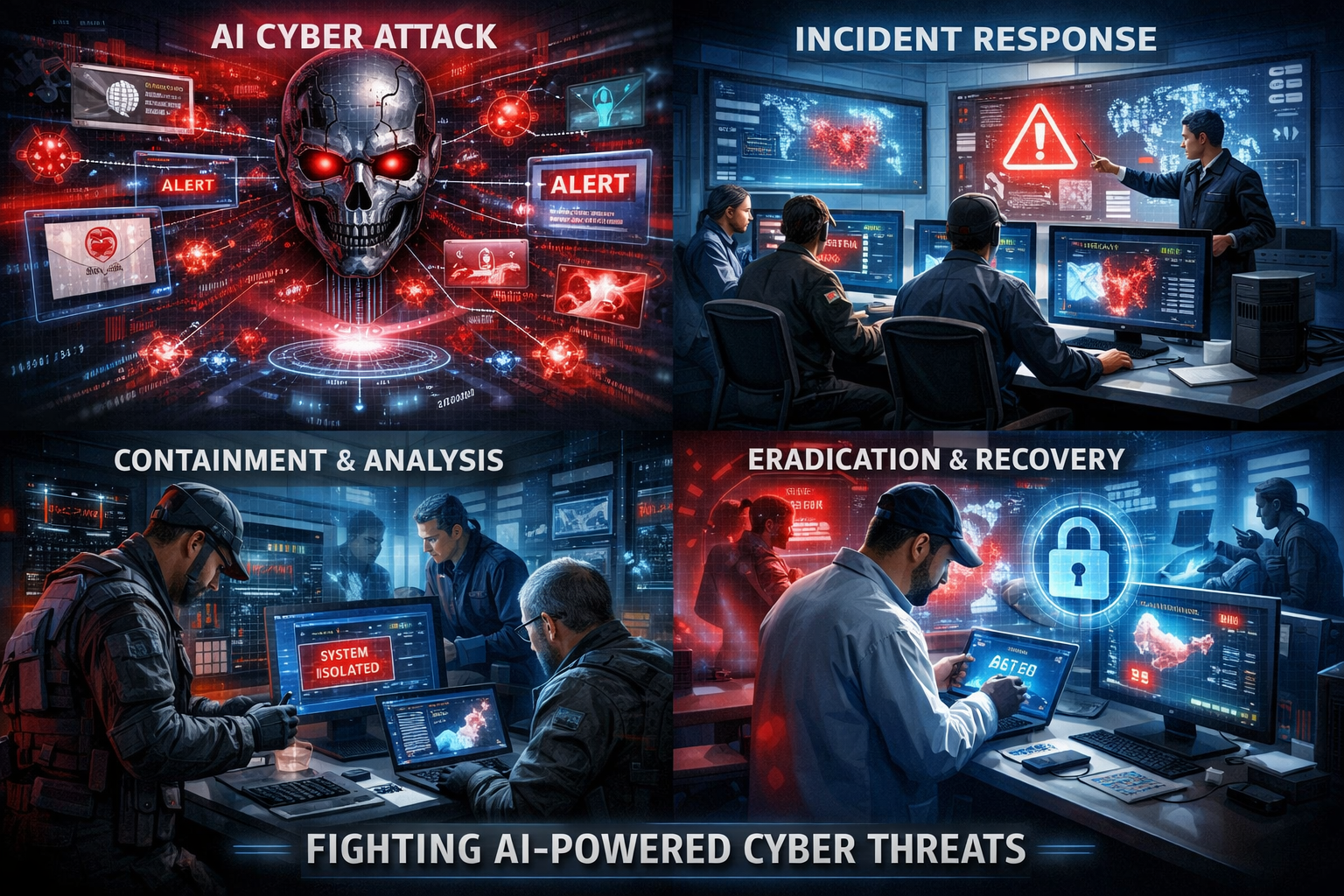
Incident Response focuses on structured actions across detection, containment, eradication, and recovery. Against AI-driven threats, this lifecycle becomes critical for limiting operational disruption and reducing business risk. Even the most advanced security architectures can be bypassed, making response readiness just as important as prevention.
Rapid Detection and Threat Analysis
AI-powered attacks often generate weak or non-traditional indicators of compromise. Conventional monitoring tools may overlook these signals. A mature Incident Response capability combines human expertise with behavioral analytics, threat intelligence, and contextual analysis to detect anomalies early. Indicators such as abnormal access behavior, unexpected automation activity, or unusual data flows can signal an AI-assisted intrusion in progress.
High-Speed Containment to Limit Damage
One of the most dangerous characteristics of AI-driven malware is its ability to move laterally at machine speed. Without swift containment, attackers can escalate privileges and compromise entire environments within minutes. A rehearsed Incident Response plan enables teams to rapidly isolate affected systems, revoke compromised credentials, and restrict network communications, effectively halting the spread of the attack.
Forensic Investigation and Neutralization
Incident Response plays a central role in understanding how AI-powered attacks operate. Through digital forensics and root cause analysis, responders can identify exploited vulnerabilities, attacker methodologies, and the role of AI in automating decision-making. This insight allows organizations to eradicate malicious artifacts, remediate weaknesses, and strengthen defenses against similar future attacks.
Organizational Resilience Beyond Technology
AI-powered cyber threats increasingly target human trust through deepfake audio, automated social engineering, and highly personalized phishing. Incident Response programs that incorporate crisis communication, employee awareness, and coordination with legal and regulatory teams help organizations manage reputational, financial, and compliance impacts alongside technical recovery.
Continuous Improvement Through Lessons Learned
Post-incident analysis is essential in an AI-driven threat environment. Incident reviews provide intelligence on attacker behavior, response effectiveness, and procedural gaps. These insights feed directly into improved detection logic, refined security policies, enhanced training programs, and more resilient response strategies.
Outlook
As cyber threats become more autonomous and intelligent, Incident Response can no longer be viewed as a reactive function. It is a strategic capability that enables organizations to adapt, respond, and recover in real time. By integrating rapid detection, decisive containment, informed remediation, and continuous learning, Incident Response stands as a decisive force in banishing AI-powered cyber threats and protecting critical digital assets.
Sources
- IBM Security – Cost of a Data Breach Report: https://www.ibm.com/reports/data-breach
- NIST – Computer Security Incident Handling Guide (SP 800-61 Rev. 2): https://csrc.nist.gov/publications/detail/sp/800-61/rev-2/final
- Palo Alto Networks – AI in Cybersecurity: https://www.paloaltonetworks.com/cyberpedia/ai-in-cybersecurity
- ENISA – Threat Landscape: https://www.enisa.europa.eu/topics/threat-risk-management/threats-and-trends