


Introduction
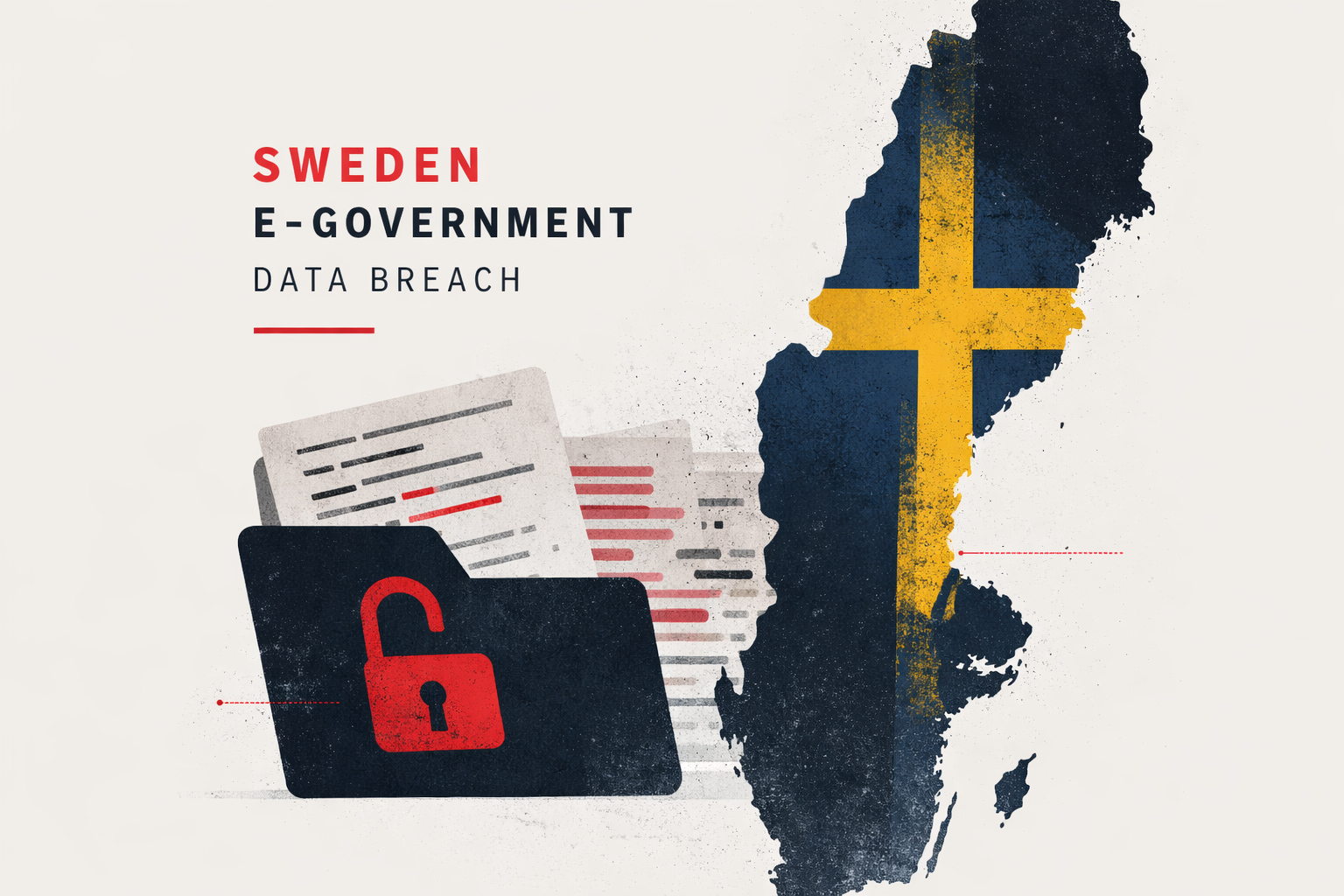
A significant cybersecurity incident has surfaced involving Sweden’s digital government infrastructure. A threat actor operating under the alias ByteToBreach claims to have compromised the infrastructure of CGI Sverige AB, a subsidiary of global IT services company CGI Group, and subsequently leaked the complete source code of Sweden’s e-government platform along with multiple sensitive internal assets.
The leaked dataset reportedly includes internal databases, API signing systems, authentication components, infrastructure access credentials, and other operational artifacts. The source code itself has been released publicly for free, while additional data such as citizen personally identifiable information (PII) and electronic signing records are reportedly being sold separately on underground markets.
Given that Sweden relies heavily on digital public services, with roughly 95 percent of the population using e-government platforms, this incident has serious implications for national digital security and citizen privacy.
Original breach disclosure credit: Dark Web Informer threat intelligence feed
Background: Sweden’s Digital Government Infrastructure
Sweden is widely recognized as one of the most digitally advanced governments in the world. The national e-government ecosystem enables citizens to interact with state services through secure digital portals for tasks such as:
- Tax filings
- public service applications
- legal document signing
- identity authentication via e-ID
- case management with government agencies
Core components of the platform reportedly include systems such as citizen service portals, electronic signature platforms, and authentication frameworks used by government agencies.
Many of these systems are operated or maintained by external contractors such as CGI Sverige AB, which provides managed IT services for government infrastructure.
This outsourcing model creates a critical supply-chain dependency, meaning a breach of the vendor can expose national infrastructure.
Timeline of the Incident
March 12, 2026
Threat actor ByteToBreach posts an announcement claiming to have obtained the full source code of Sweden’s e-government platform.
Same Day
The attacker releases the source code publicly on open web repositories with multiple backup download links.
Following Days
Authorities in Sweden confirm an incident and begin investigation alongside national cyber defense authorities including CERT-SE.
CGI acknowledges that two internal test servers were involved, though researchers warn that leaked credentials and architecture documentation suggest deeper exposure.
What Was Reportedly Leaked
The breach reportedly exposed several sensitive technical assets.
1. Full E-Government Platform Source Code
The attacker claims the complete application source code of Sweden’s e-government platform was exfiltrated.
Source code leakage is particularly dangerous because it reveals:
- internal system architecture
- authentication workflows
- hidden API endpoints
- logic vulnerabilities
- internal security controls
Attackers can now analyze the code offline to identify vulnerabilities that may still exist in production systems.
Even if patches are later applied, the code becomes a permanent intelligence resource for attackers.
2. Staff Database
An internal employee database was reportedly included in the leaked dataset.
Typical information stored in such databases may include:
- employee names
- email addresses
- internal IDs
- roles and privileges
- authentication metadata
This information can enable:
- targeted spear-phishing attacks
- privilege escalation attempts
- credential harvesting campaigns
- social engineering against IT staff
Internal personnel data often becomes the entry point for follow-up intrusions.
3. API Document Signing System
Another major exposure involves API systems used for electronic document signing.
Digital signature infrastructure is a core component of modern government services.
It ensures that:
- contracts are legally binding
- government approvals are authenticated
- citizens can sign documents remotely
If attackers gain insight into the signing system’s architecture, they could potentially:
- identify flaws in verification workflows
- attempt signature forgery attacks
- exploit misconfigured signing endpoints
Such risks can undermine trust in digital legal documents.
4. Jenkins SSH Pivot Credentials
The leak reportedly included Jenkins server credentials and SSH keys used for system access.
Jenkins is a popular CI/CD (Continuous Integration / Continuous Deployment) platform used to build and deploy applications.
If Jenkins access is compromised, attackers can:
- inject malicious code into builds
- deploy backdoors into production
- access infrastructure secrets
- pivot into internal networks
In this case, the attacker claims Jenkins was fully compromised
5. RCE Test Endpoints
The dataset also reportedly contains Remote Code Execution (RCE) test endpoints.
RCE endpoints are extremely sensitive because they allow systems to execute commands remotely.
In development environments they may exist for debugging purposes, but if exposed they can allow attackers to:
- execute arbitrary commands
- deploy malware
- exfiltrate sensitive data
- escalate privileges
Exposure of these endpoints effectively provides attackers with ready-made attack vectors.
6. Initial Foothold and Jailbreak Artifacts
The attacker also released artifacts documenting how the intrusion was performed.
These materials reportedly include:
- entry-point vulnerabilities
- exploitation scripts
- privilege escalation techniques
- internal environment mapping
Publishing these artifacts essentially provides a step-by-step blueprint of the breach, which other attackers could replicate.
Why Source Code Leaks Are Extremely Dangerous
Source code leaks are often more damaging than raw data leaks.
They allow attackers to:
- Reverse Engineer the System
- Attackers can analyze the entire architecture offline without triggering detection systems.
- Identify Zero-Day Vulnerabilities
- Hidden vulnerabilities inside the code may be discovered and exploited before defenders patch them.
- Bypass Security Controls
- Security logic such as rate limiting, authentication validation, and encryption workflows becomes visible.
- Attackers can craft requests that bypass these controls.
- Launch Supply Chain Attacks
If the platform integrates with third-party systems, attackers can target those connections as well.
About the Threat Actor: ByteToBreach
The threat actor ByteToBreach appears to be actively targeting European organizations.
Recent activity attributed to the actor includes:
- breach of Viking Line passenger data
- attacks against European companies
- data leaks and extortion attempts
Their typical strategy involves:
- exploiting infrastructure misconfigurations
- extracting internal data
- attempting extortion
- publicly releasing data if payment is not made
Potential Long-Term Impact
If the claims are accurate, the consequences could include:
- increased cyber espionage risks
- identity fraud targeting Swedish citizens
- attacks against government services
- erosion of trust in digital government platforms
Some security experts warn that large portions of the infrastructure might need to be re-architected or rebuilt if core authentication systems are affected
Key Cybersecurity Lessons
- This breach highlights several critical lessons:
- Test environments must be secured like production systems
- CI/CD platforms are high-value attack targets
- Secrets should never be stored in plaintext or heap dumps
- Vendor supply chain risk must be actively monitored
- Government infrastructure should adopt zero-trust architecture
Conclusion
The alleged leak of Sweden’s e-government platform source code represents one of the most serious cybersecurity incidents involving national digital infrastructure in recent years.
Even if parts of the data originate from test environments, the exposure of internal code, credentials, signing systems, and architecture documentation provides attackers with a powerful intelligence resource.
As governments worldwide continue to digitize public services, this breach serves as a reminder that national infrastructure security is only as strong as the weakest link in the supply chain.
Source Attribution:
Dark Web Informer Threat Intelligence Feed (Original leak report)